
"Clothes speak volumes before you do," says celebrity stylist Tanya Ghavri, who believes elegance matters more than virality.

Hindustan Zinc Ltd (HZL) plans to generate 2,000 crore in value by implementing artificial intelligence-driven solutions across its mining and manufacturing operations. This initiative is part of a broader industry trend to adopt digital technologies for cost reduction, margin improvement, and enhanced environmental and social governance.

Congress leader Rahul Gandhi on Monday launched a scathing attack on Prime Minister Narendra Modi over the latest fuel hike, saying mehangai manav has struck again and he has just one job of making promises during elections and attacking people's pockets at other times.

Sensex gains over 400 points while Nifty trades above 23,800 amid strong IT sector buying.

Indian stock market indices Sensex and Nifty experienced a significant drop in early trade, reversing a three-day rally. The decline was triggered by a sharp increase in crude oil prices, weak global market trends, and continuous outflows of foreign funds.

Petrol and diesel prices in India have seen their fourth increase in less than two weeks, pushing cumulative hikes to nearly Rs 7.5 per litre since May 15, reaching their highest levels since May 2022. This surge, driven by global crude oil costs and the Iran conflict, is expected to exacerbate inflationary pressures and raise transportation costs across the economy.

Equity market sentiment this week will be guided by global trends in the absence of any major domestic triggers, while bourses may also see some volatility amid expiry of derivatives contracts, analysts said. Fears of sooner-than-expected tapering in monetary stimulus by the US Federal Reserve, rising cases of the Delta variant of the coronavirus coupled with China's regulatory crackdown triggered selling in global markets in the previous week.
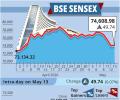
Indian benchmark equity indices, Sensex and Nifty, closed marginally higher, breaking a four-day losing streak, despite elevated crude oil prices and ongoing geopolitical uncertainties. The market saw a temporary pause in panic selling, though cautious sentiment persists.

Hospital stocks have emerged as a strong theme in 2026, outperforming benchmark indices due to robust earnings growth, improved occupancy, higher average revenue per occupied bed, and aggressive expansion plans by major chains.

Indian stock markets are expected to remain highly sensitive to geopolitical developments, particularly the US-Iran situation, and crude oil prices this week, with analysts also highlighting the influence of the rupee-dollar trend, foreign investor activity, and upcoming inflation data.

Piramal Pharma anticipates a significant turnaround in financial year 2026-27 (FY27), projecting early-to-mid teens revenue expansion and a sharp improvement in profitability, driven by improved business momentum, new product acquisitions, and structural tailwinds.
Indian equities on Dalal Street saw volatility as global market trends and weak rupee impacted investor sentiment. Track Sensex, Nifty50 movement and key market drivers for May 5, 2026.

Indian cement manufacturers, despite a stable Q4FY26, are bracing for significant profitability pressures from Q1FY27 onwards due to escalating input costs, primarily driven by the West Asia conflict's impact on coal and petcoke prices.

Do you know suddenly why India's toffees are the toast of the town?

Indian defence stocks have seen an average year-on-year gain of 67 per cent, driven by renewed interest following 'Operation Sindoor' and a broader increase in global geopolitical tensions, with the combined market capitalisation of 18 firms increasing by approximately 2.3 trillion.

Indian equity markets experienced a significant decline in early trade, with the BSE Sensex and NSE Nifty dropping, as escalating geopolitical tensions in West Asia and a surge in global oil prices dampened investor sentiment. Track Sensex, Nifty50 movement and key market drivers for May 8, 2026.

Analysts predict that the ongoing conflict in West Asia, crude oil price fluctuations, and the US Federal Reserve's interest rate decision will significantly influence the Indian equity market this week.

Net investments into equity mutual fund schemes in India remained elevated at approximately 38,440 crore in April, despite a slight dip from March's high and a 3% month-on-month decline in Systematic Investment Plan (SIP) inflows.

Among the Sensex firms, Bajaj Finance fell by nearly 3 per cent, the most among the 30 frontline companies. Bajaj Finserv, Axis Bank, HDFC Bank, Reliance Industries, NTPC, ICICI Bank and IndusInd Bank were the other major laggards. In contrast, Tata Motors, Sun Pharma, Maruti and Mahindra & Mahindra were the gainers.

If there's one print that refused to stay quiet this season at Lakme Fashion Week, it was checks.
From the Sensex basket, Mahindra & Mahindra, Tata Motors, NTPC, HCL Technologies, Larsen & Toubro, Infosys, Tech Mahindra and State Bank of India were the major laggards. Bharti Airtel, Bajaj Finance, Bajaj Finserv, Tata Consultancy Services and IndusInd Bank were among the gainers.

Indian benchmark indices, Sensex and Nifty, ended lower in choppy trade, with the Sensex declining 114 points, as investors reacted to unabated foreign fund outflows and rising geopolitical uncertainties.

Benchmark equity indices Sensex and Nifty slumped over 1 per cent on Friday, tracking a weak trend in global markets and fresh foreign fund outflows. Falling for the third day running, the 30-share BSE Sensex tumbled 1,017.23 points or 1.24 per cent to settle at 81,183.93.

Tata Steel is strategically positioned for growth, leveraging India's robust steel demand, significant cost transformation programmes, and favourable protectionist policies in the EU and UK. The company is expanding its India capacity and optimising operations in its European units to enhance profitability and reduce debt.

American industry groups sought punitive tariffs on Indian goods at USTR hearings, while Indian officials defended the country's manufacturing growth as demand-led and WTO-compliant.

'Markets never fully lose hope. But an important shift could come if the Strait remains closed -- moving from high prices to no prices.'

Cash remains dominant for many transactions despite continued expansion in digital payments across the country.
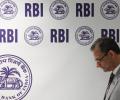
India Ratings and Research predicts the Reserve Bank of India (RBI) will maintain the repo rate at 5.25 per cent throughout FY27, despite potential inflationary pressures from higher fuel prices, with inflation expected to remain within the central bank's tolerance band.

Mumbai-based menswear designer Priya Patil who recently showcased at Paris Fashion Week 2026, talks about her inspiration to design and transform menswear fashion in India.

Domestic Institutional Investors (DIIs) have significantly increased their holdings in Nifty 500 companies, reaching a record 20.9 per cent by the end of March, while Foreign Portfolio Investors (FPIs) reduced their ownership to an all-time low of 17.1 per cent, according to Motilal Oswal Financial Services.
Indian benchmark indices Sensex and Nifty experienced a significant tumble in early trade, driven by surging global oil prices, continuous outflows by Foreign Institutional Investors (FIIs), and persistent geopolitical uncertainties, particularly in West Asia.

Benchmark indices Sensex and Nifty took a beating on Thursday and dropped over 1 per cent each, weighed by selling in index major Reliance Industries, IT and banking stocks amid weak global trends. The BSE Sensex fell 770.48 points or 1.29 per cent to settle at 58,766.59. During the day, it tanked 1,014.5 points or 1.70 per cent to 58,522.57. Similarly, the NSE Nifty declined 216.50 points or 1.22 per cent to close at 17,542.80.

Gold and silver prices experienced a significant drop in the national capital due to a global selloff driven by inflation concerns, central bank policies, and geopolitical tensions.

Indian benchmark stock indices Sensex and Nifty rebounded, closing over 1% higher, mirroring a global equities recovery after recent losses due to geopolitical tensions.
In the absence of major domestic events, equity markets will be driven by global trends, foreign fund flows and movement in the Brent crude oil, analysts said. The major global events this week are the European Central Bank interest rate decision and China's inflation rate, they added. "Indian equity markets are outperforming most of their global peers and trying to show resilience despite weak global cues.

India's mergers and acquisitions (M&A) market is projected to maintain an annual run-rate of approximately $200 billion, evenly split between domestic, inbound, and outbound transactions, despite global geopolitical turbulence, according to Rajesh Singhi, global co-head, M&A Advisory, Standard Chartered Bank.

The new approach emphasises practical understanding and contemporary skills, encouraging students to think critically and apply concepts in real-world contexts, says Srividya Sridhar, principal of Lotus Petal Senior Secondary School.

Indian markets on Dalal Street rallied sharply as easing tensions in the US-Iran conflict and stable oil prices boosted sentiment. Track Nifty 50 and BSE Sensex performance and key global triggers.

Kalyani Priyadarshan made a striking debut at Cannes, proudly showcasing Indian fashion and jewellery on the red carpet.

Indian benchmark indices, Sensex and Nifty, opened lower on Tuesday, driven by a surge in global crude oil prices and continued outflows by Foreign Institutional Investors (FIIs), reflecting fragile market sentiment influenced by external factors.
